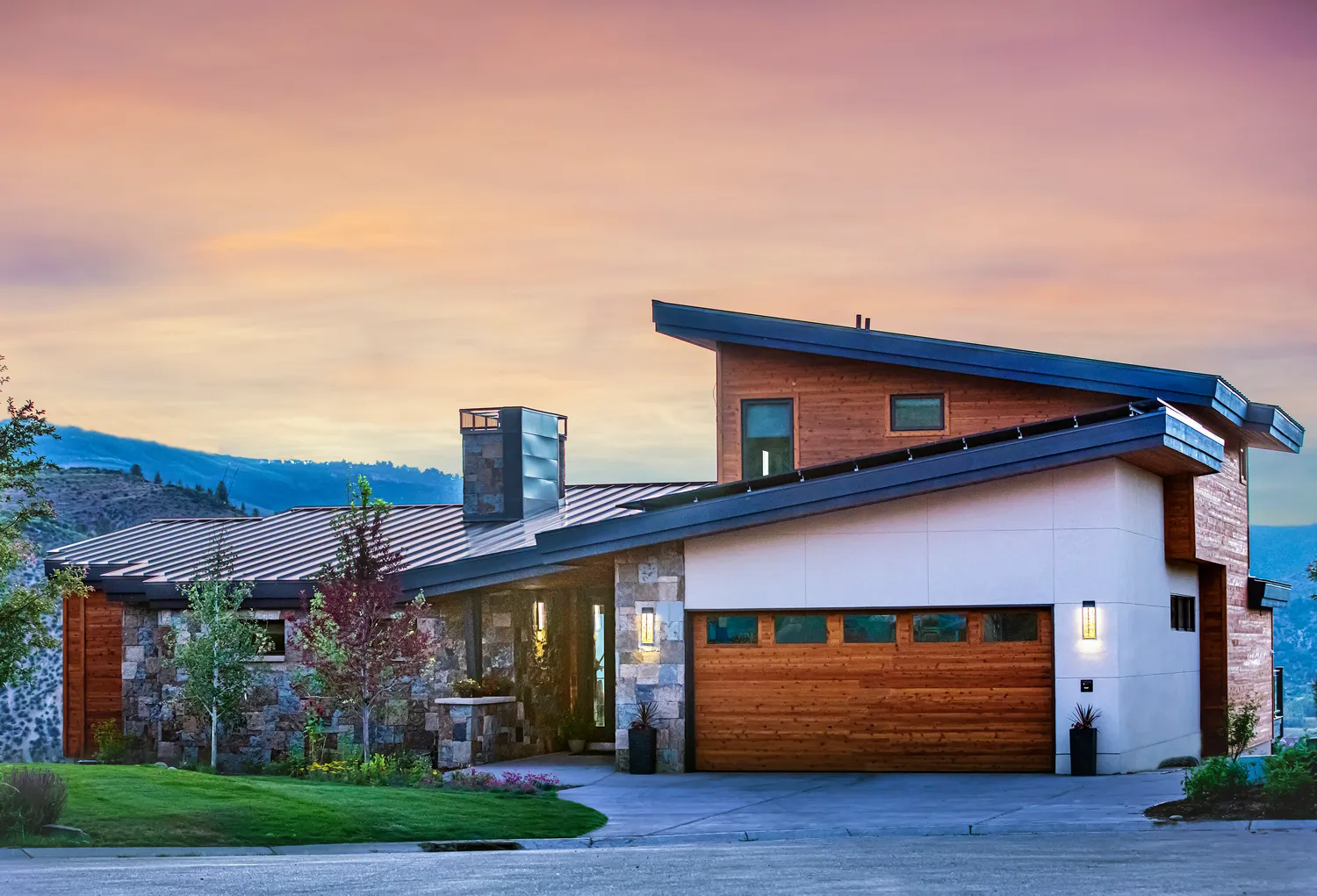
Quick answer: In the Vail Valley, the materials that hold up long-term are standing seam metal roofing, fiber cement or stone exteriors, altitude-rated high-performance windows, and pressure-treated or composite decking rated for UV and freeze-thaw cycling. Standard national-brand products sold for a generic U.S. climate are frequently under-built for this elevation, and the gap shows up as early fading, cracking, or water intrusion within a handful of winters rather than the decades they're rated for elsewhere.
Below is a category-by-category breakdown of what actually performs at 7,000–9,000+ feet, based on what we spec and what we've seen fail. If you're earlier in the process and want to understand the full scope of what we handle on material selection, our services page covers it, and our our-process page shows where material decisions fall in the build sequence.
Why Standard Materials Fail Here
Two forces do most of the damage: snow load and UV. Eagle County building code requires roof framing engineered for ground snow loads that can run 90 to 150+ pounds per square foot depending on elevation and exposure - several times the 20-30 psf common across most of the country. At the same time, UV intensity at altitude is meaningfully higher than at sea level, and it doesn't let up - intense sun on south- and west-facing walls even in the dead of winter accelerates degradation that would take years longer elsewhere. We go deeper on both of these forces, and how they shape structural engineering, in Building at Altitude: Mountain Construction Challenges Unique to Vail.
A third factor is temperature swing. It's common for a south-facing surface to sit well above freezing in direct winter sun and drop 40+ degrees after sunset. Materials that expand and contract repeatedly without proper engineering - sealants, some composite products, cheaper window frames - fatigue faster here than in a milder, more stable climate.
Roofing
| Material | Performance at Altitude | Notes |
|---|---|---|
| Standing seam metal | Excellent | Sheds snow, handles freeze-thaw, long lifespan; the default for this market |
| Asphalt shingle (standard) | Poor to fair | Granule loss and cracking accelerate under UV and freeze-thaw; shorter lifespan |
| Asphalt shingle (impact/high-altitude rated) | Fair to good | Better than standard, still generally outperformed by metal |
| Synthetic slate/shake | Good | Durable, heavier - confirm structural engineering accounts for it |
Roof pitch and truss engineering are decided alongside material choice, not after - steeper pitches shed snow differently than the load calculations assume, so this is a decision made early in design, not at the finish-selection stage.
Siding and Exterior Cladding
Standard vinyl siding is a weak choice at this elevation - it can become brittle in cold and fade or warp faster under UV than its rated lifespan suggests. Fiber cement board, real stone and stone veneer, and properly treated or engineered wood siding products hold up considerably better. Whatever the material, sealants and caulking at every window and door penetration matter as much as the cladding itself; lower-grade sealants are one of the most common early-failure points we see in homes built by out-of-market contractors unfamiliar with this climate.
Windows and Doors
Standard national-brand windows are frequently under-specced for Vail Valley conditions. Look for:
- Higher U-factor (better insulating) glass packages
- Argon or krypton gas fills between panes
- Frame materials (fiberglass, quality vinyl, or clad wood) that resist warping under repeated temperature swings
- Proper flashing and sealant details at the rough opening - installation quality matters as much as the product spec
This is one of the areas where cutting corners doesn't show up immediately - it shows up as ice damming, condensation, or drafts two or three winters in.
Decking and Outdoor Living Materials
Composite decking rated for UV and freeze-thaw generally outperforms standard pressure-treated lumber for long-term maintenance, though well-maintained real wood remains a valid choice for owners who prefer it. Whatever the material, check the manufacturer's altitude and UV rating specifically - many composite products are rated for a generic climate that doesn't reflect what a south-facing deck at 8,500 feet experiences over a winter. For more on how outdoor spaces get designed around this climate, see Outdoor Living Spaces in Mountain Homes.
Concrete and Foundation Considerations
Concrete curing is affected by both altitude and cold-weather pours - mix designs often need adjustment, and pour timing has to work around the shoulder-season weather windows that define the construction calendar here. This is a structural, not cosmetic, material decision, and it's one more reason out-of-market bids frequently underestimate cost and schedule.
The Bottom Line on Material Selection
The pattern across every category is the same: products built for a generic national climate are frequently the wrong choice here, even when they're a reputable brand. The upfront cost difference between standard and altitude/UV-rated products is usually small relative to the cost of a repaint, reside, or re-roof five to ten years earlier than expected - or worse, a water intrusion problem behind a wall.
Connect with us to talk through material selection for your specific site and elevation, or browse our portfolio to see these choices in finished homes across the valley.
Related reading: