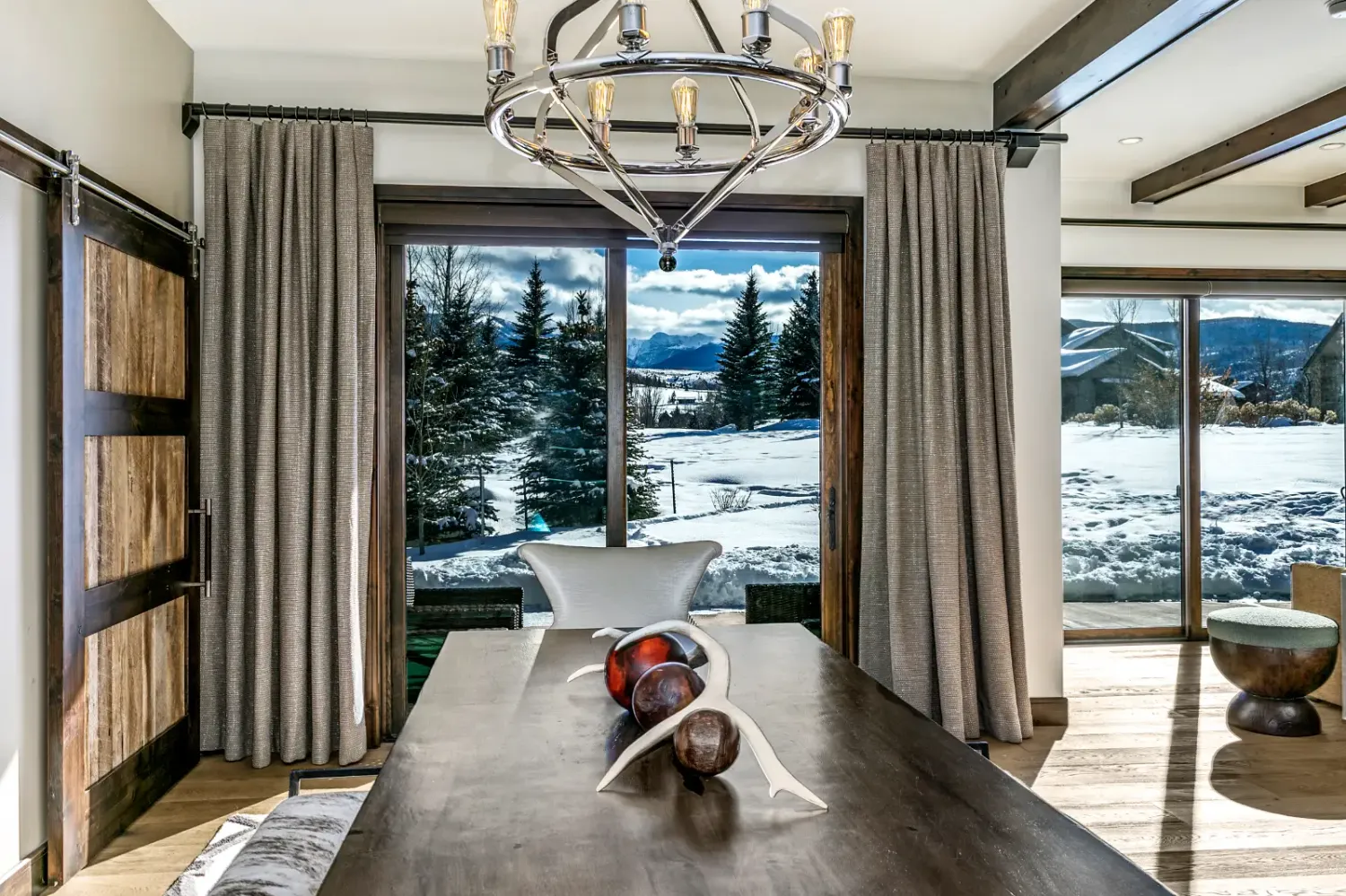
Quick answer: In 2026, mountain modern design in the Vail Valley is moving toward simplified material palettes (stone, blackened metal, warm wood), larger and more intentional window openings that frame specific views rather than just maximizing glass, and rooflines that read as clean and contemporary while still meeting Eagle County's snow load engineering requirements. The trend isn't away from mountain character - it's toward doing fewer things, more precisely.
Below is what we're actually seeing on the boards and in the field this year, separated from what's just marketing language. If you're weighing these choices for your own lot, our process page shows how design decisions get tested against engineering and budget before they're locked in, and our portfolio has finished examples across several of these styles.
What "Mountain Modern" Actually Means Right Now
The style has been evolving for close to two decades, moving away from heavy log-and-timber alpine architecture toward cleaner lines, without abandoning materials that read as authentically mountain. In 2026, the clearest shift is restraint: fewer competing textures, a tighter material palette (often two or three primary materials instead of five or six), and more confidence in large, flat planes of stone or metal siding.
This isn't a rejection of mountain character - it's an editing process. The wood, the stone, the steep-country proportions are still there. What's gone is the ornamentation that used to signal "mountain house" by default: heavy corbels, oversized log trusses everywhere, and busy rooflines with too many intersecting planes.
Material Palette Trends
| Material | 2026 Trend | Why |
|---|---|---|
| Exterior stone | Larger-format, flatter-set stone; less "stacked" texture | Reads as more contemporary, easier to detail around large window openings |
| Metal siding/roofing | Dark, matte, blackened or zinc-toned standing seam | Sheds snow well (see our altitude construction piece), ages evenly, low maintenance |
| Wood accents | Thermally modified or char-treated wood in smaller, deliberate accent zones | UV and moisture resistance at altitude without the maintenance burden of raw wood siding |
| Glass | Larger fixed panes, fewer visible mullions | Frames a specific view rather than maximizing total glazing |
| Concrete | Exposed or board-formed concrete at entries and foundations | Durability plus a contemporary texture that pairs well with stone |
The throughline across all of these: materials chosen first for how they perform at 7,000 to 9,000+ feet, and second for how they look. That ordering matters - see our full breakdown in Materials That Survive Colorado Winters.
Rooflines: Contemporary Look, Non-Negotiable Engineering
A lower-pitched, cleaner roofline is one of the most visible mountain modern signatures, but pitch and form are constrained by the same snow load engineering that governs every roof in Eagle County. A design that looks minimal from a rendering still has to shed 90 to 150+ pounds per square foot of snow load depending on elevation and exposure. The trend we're seeing succeed is asymmetric or mono-pitch roof forms that look intentionally modern while still meeting structural snow-shedding requirements - as opposed to flat roofs, which are far harder to justify structurally in this snow zone regardless of how they render.
Window and Layout Strategy
Window design has shifted from "as much glass as possible" toward deliberate framing of specific view corridors - the Gore Range from a primary suite, a ski run from the great room, a specific ridgeline from an office. Larger single panes with minimal visible framing are more common than grids of smaller windows, which also simplifies structural headers and reduces thermal bridging points. We go deeper on this specific design discipline in Maximizing Views: Window and Layout Design for Ski-Country Homes.
Interior Trends Worth Noting
- Warm minimalism - light wood tones and matte finishes replacing the darker, heavier palettes common a decade ago.
- Integrated mudrooms and gear rooms - no longer an afterthought closet, now designed as a real transition space with sightlines and finish quality matching the rest of the home.
- Quiet luxury in fixtures - matte black and brushed finishes over polished chrome, understated hardware over ornate.
- Smart systems built in from rough-in, not retrofitted - see Smart Home Tech for High-Altitude Living for what that actually looks like in practice.
What's a Trend vs. What's Durable Design
Not everything popular this year deserves to drive structural or material decisions that need to last 30-plus years. A useful filter: if a choice affects the building envelope, roof, or window performance, evaluate it against durability and altitude performance first, aesthetics second. If it's a finish, color, or fixture choice, trend-following is lower risk and easier to update later. We help clients sort exactly this during design - our our-team page has the architects and designers who do this work daily across the valley.
Build Something That Still Looks Right in a Decade
Trends are useful for informing a palette, not for dictating a structure. Connect with us to talk through what's genuinely durable versus what's a passing look, or browse our portfolio to see mountain modern design executed across different lots and budgets.
Related reading: